
Contents07
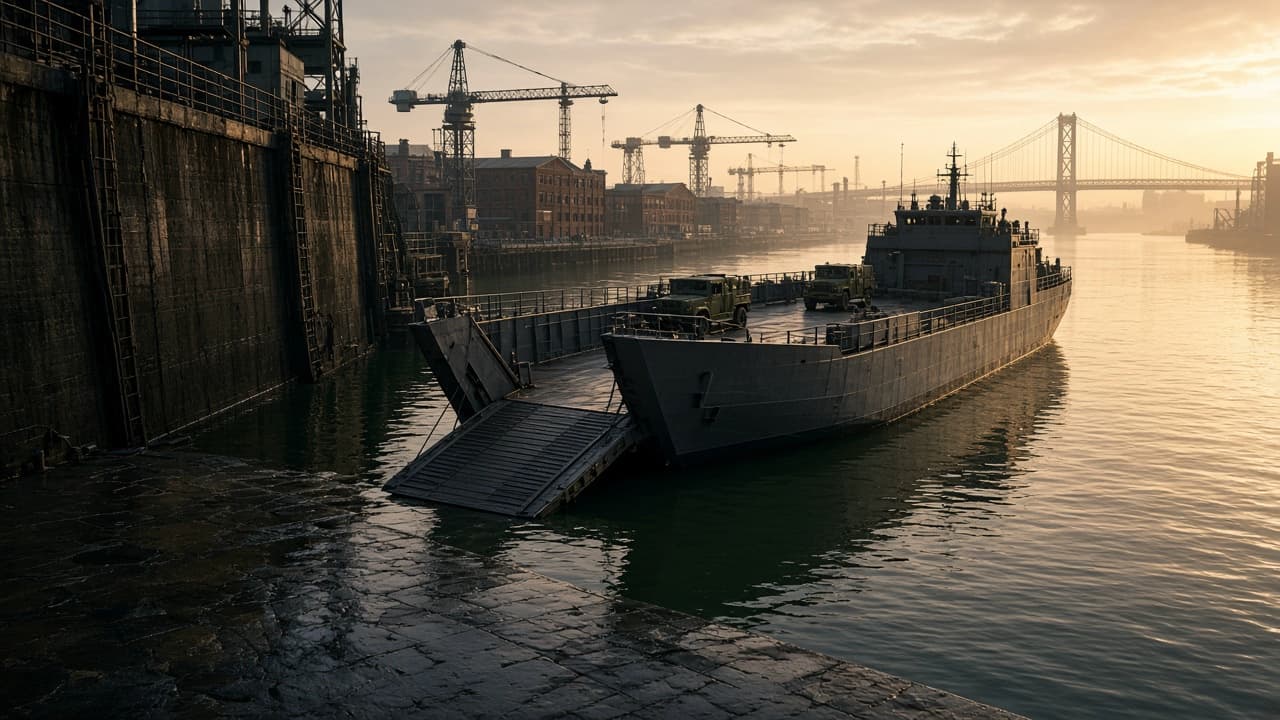
$269 million buys one landing ship, due in 2030. On Oct 29, Hanwha Defense USA said its Hanwha Philly Shipyard won that contract for the Navy's new Landing Ship Medium (LSM), with options for three more. It's the company's first US Navy ship contract. Here's what that money pays for, link by link.
1. The design
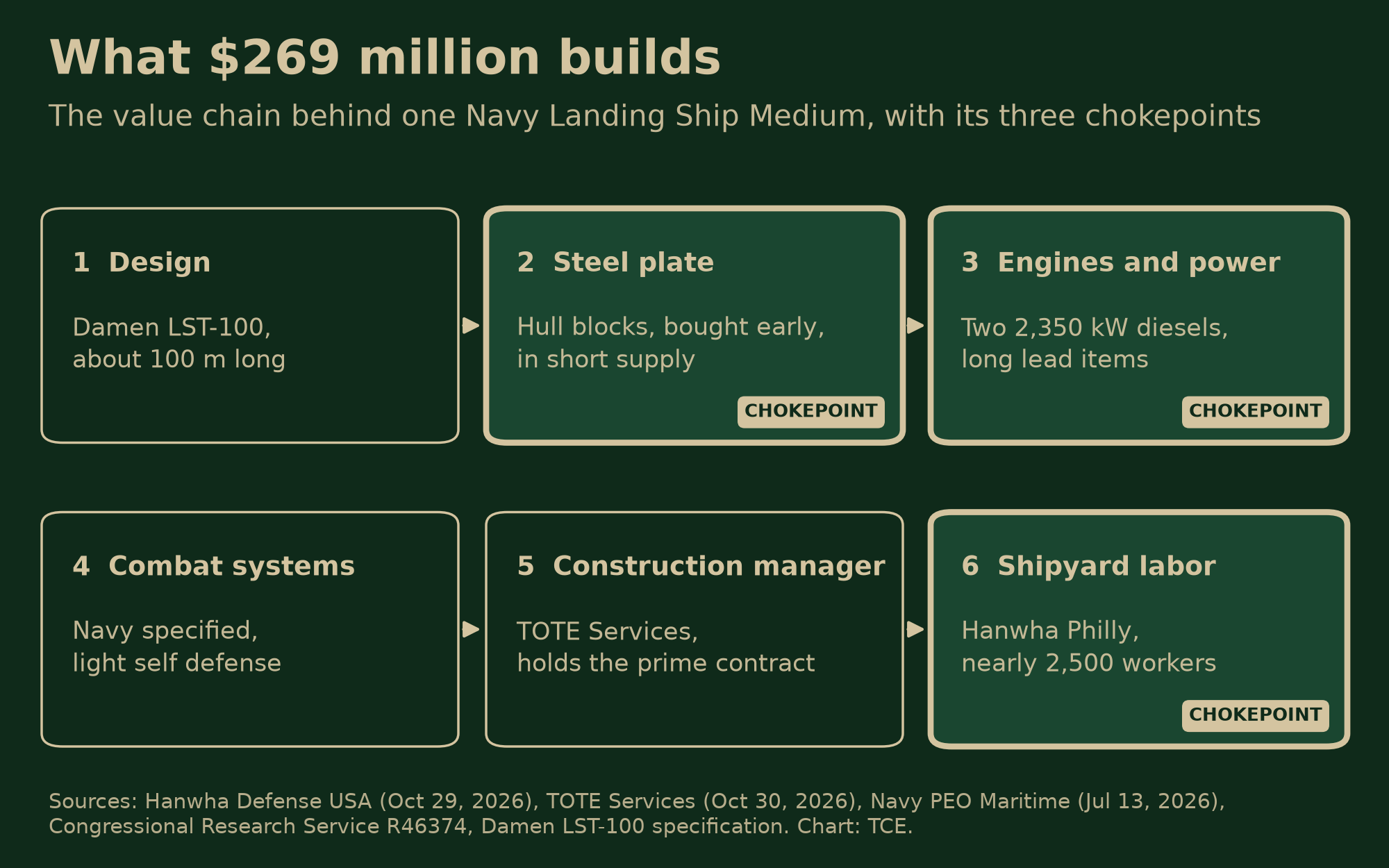
The Navy didn't draw a new ship. In December 2025 it picked the Damen LST-100, an existing Dutch design about 100 meters long and 16 meters wide, built to land troops and vehicles on a beach. A Navy official said no significant changes are planned to the baseline design. Starting from a proven design takes much of the engineering risk out before any steel is cut.
2. Steel plate
The hull is mostly steel plate, cut, bent and welded into blocks. Plate is bought early and in bulk, so its price matters before the first weld. In the September survey from the Institute for Supply Management (ISM), purchasing managers reported steel still rising in price and in short supply. Short supply and a fixed ship price make plate the first chokepoint.
 Click to enlarge
3. Engines and power
Damen's published specification for the LST-100 lists two Caterpillar 3516C diesel engines of 2,350 kilowatts each, plus three diesel generators for onboard power. Engines are long lead items. They're ordered well before construction so they arrive when the hull is ready. If one is late, the hull waits. That makes engines the second chokepoint.
4. Combat systems
The LSM is a transport, not a warship. Its self-defense weapons and its navigation and communications gear follow Navy specifications, but they're a smaller part of the bill than on a destroyer or frigate. That's part of why the ship is cheap by Navy standards. The Congressional Research Service notes LSMs would be much smaller and much less expensive to buy and operate than the Navy's current amphibious ships.
5. The construction manager
The Navy's contract isn't with the shipyard. In July, the Navy awarded TOTE Services a $2.2 billion contract as Vessel Construction Manager. TOTE holds the prime contract, picks the yards and manages their subcontracts. It sent a request for proposals to US yards in July 2026 and chose Hanwha on competitive pricing and acceptance of the subcontract terms.
TOTE has run this model before at the same yard. Hanwha Philly built four training ships for state maritime academies under a construction manager, with a fifth due in 2027.
6. Shipyard labor
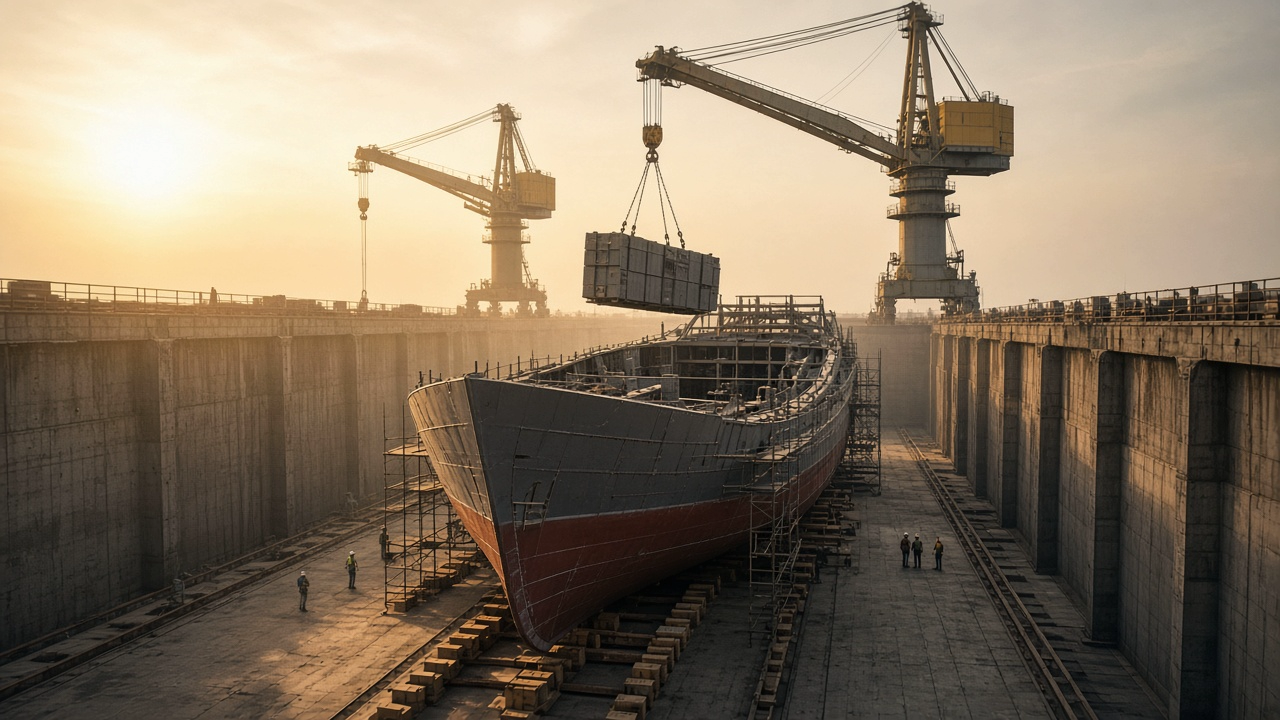
Hanwha Philly says it has more than doubled its workforce since 2024, to nearly 2,500. The yard covers 115 acres and has two of the largest graving docks on the US East Coast. It has built about half of the large ocean-going ships for US domestic trade since 2000.
 Click to enlarge
Construction is set to start in the fourth quarter of 2027. Between now and then, the yard has to hire, train and keep the welders, fitters and electricians who will turn plate into a ship. That's the third chokepoint, and the one that sets the schedule.
The design is settled. The schedule now depends on the yard.
Sources
- Hanwha Defense USA, press release, Oct 29, 2026.
- TOTE Services, press release, Oct 30, 2026.
- Naval Sea Systems Command, Program Executive Office Maritime, Vessel Construction Manager award, July 13, 2026.
- Congressional Research Service, R46374, Navy Medium Landing Ship (LSM) Program, Jan 13, 2026.
- Damen Shipyards, LST-100 product sheet.
- Institute for Supply Management, Manufacturing PMI Report, September 2026, released Oct 1, 2026.
- Hanwha Defense USA, press release, Sept 9, 2026.