
Contents06
Set a legal maximum price below what buyers will pay, and buyers do not stop bidding. They move to a channel the ceiling does not reach. College sports is running that experiment. A court settlement capped what schools can pay athletes directly, and a side market formed next to it: NIL (name, image and likeness) deals paid by donor groups and businesses. It is not a black market. It is legal, it is reviewed, and it is where the bidding went.
A multibillion-dollar business
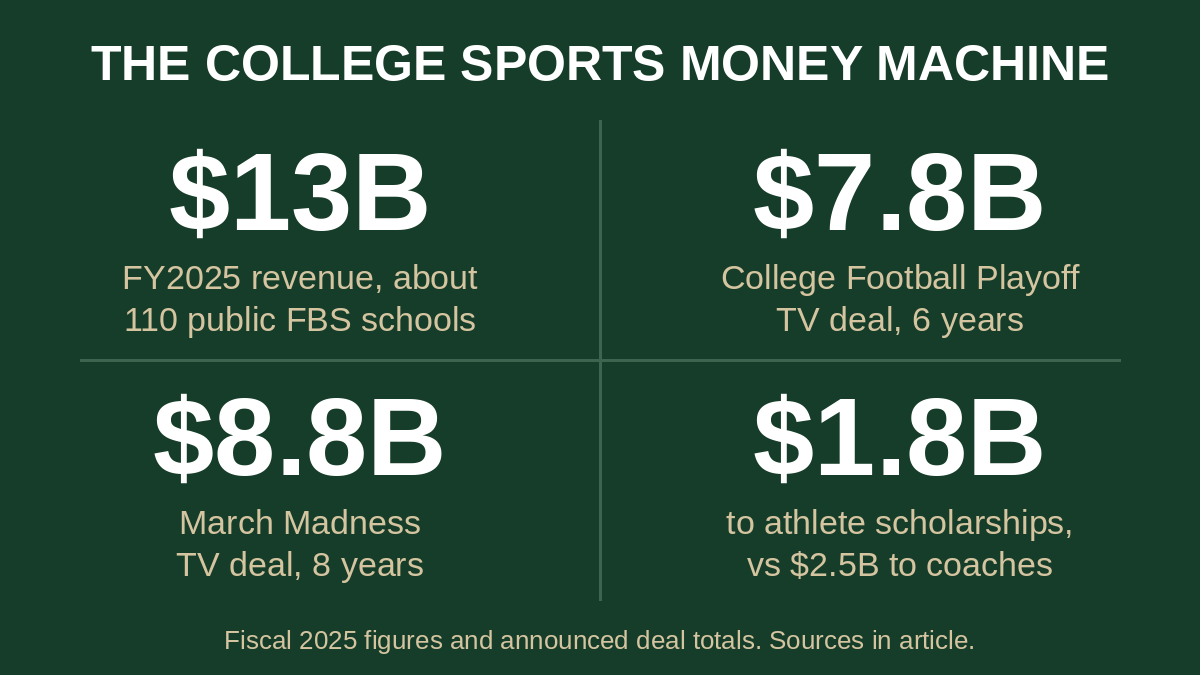
The FBS (Football Bowl Subdivision), the top tier of college football that includes the SEC, Big Ten, Big 12 and ACC, has 136 schools (CBS Sports, July 1, 2025). About 110 public FBS schools took in nearly $13 billion from sports in fiscal 2025 (Knight-Newhouse College Athletics Database). Private universities such as Notre Dame do not have to report these figures, so the data reflects only what is publicly available and undercounts the total. ESPN pays $7.8 billion over six years for the College Football Playoff (ESPN, March 19, 2024). The Big Ten's deals with Fox, CBS and NBC total about $8 billion over seven years (Sports Business Journal, Aug 18, 2022). CBS and Turner pay $8.8 billion for March Madness through 2032 (NCAA, April 12, 2016). Adidas pays Penn State about $30 million a year for apparel rights (CBS Sports, Oct 9, 2026).
In fiscal 2025, before revenue sharing began, those public schools spent about $1.8 billion on athlete scholarships and living costs, $2.5 billion on coaches and $2.8 billion on facilities and debt (Knight-Newhouse).
For decades the model was amateur. In 2014 a federal judge ruled in O'Bannon that the NCAA's ban on NIL pay violated antitrust law. In 2021 the Supreme Court ruled 9 to 0 against the NCAA in NCAA v. Alston, and NIL deals opened that July. The House settlement, approved in June 2025, pays about $2.8 billion in back damages and lets schools pay athletes directly (AP, June 6, 2025). The top athletes are, in economic terms, professionals producing income for their schools.
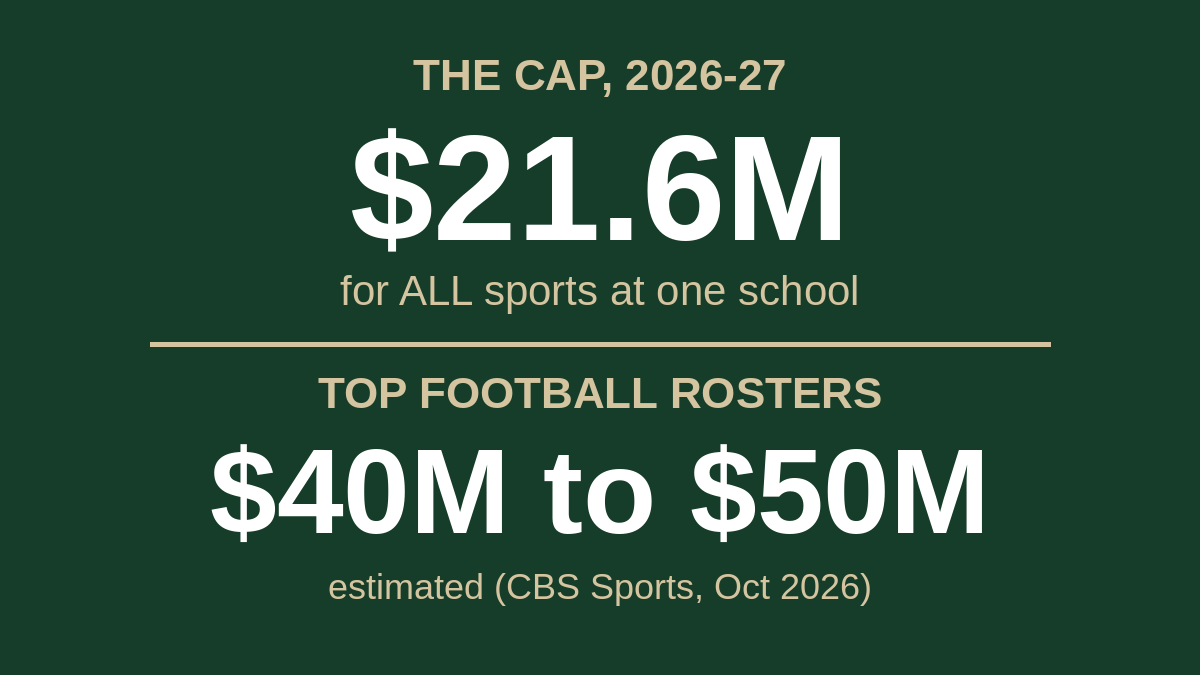
The cap on that direct pay is an administrative formula, not a market price. Each school may share up to 22% of the average media, ticket and sponsorship revenue at the five conferences named in the case (College Sports Commission). For 2026-27 that comes to about $21.6 million per school, for every sport combined (CSC, Oct 1, 2026). Nothing in the formula asks what a quarterback is worth to a team.
Who hit the ceiling
In 2025-26, the first year, 319 of the 365 Division I schools opted into revenue sharing (AP, Oct 1, 2026).
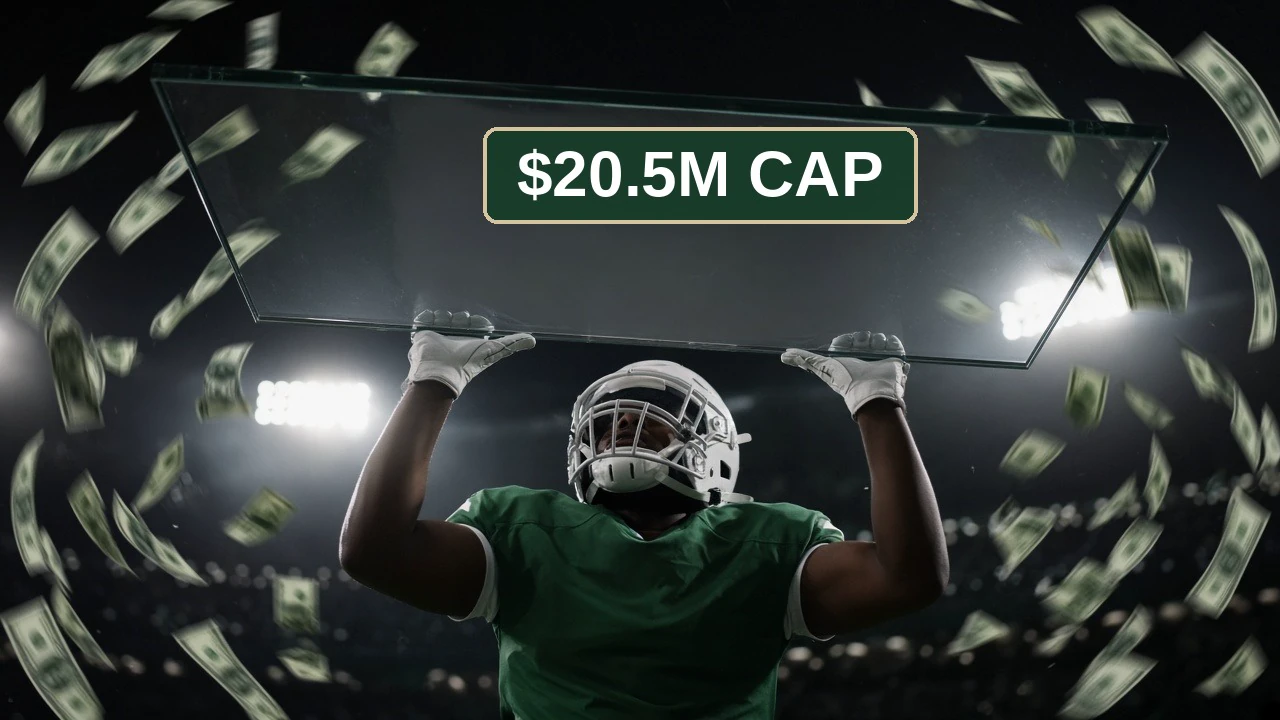
Of those, 68 paid at or within 5% of that year's $20.5 million cap (CSC, Oct 1). Names were redacted, but 68 matches the number of schools in the ACC, Big Ten, Big 12 and SEC, which were widely expected to max out (AP). For them, the ceiling binds.
The side door
Outside payments, including deals a school helps arrange, do not count against the cap (CSC, Revenue Sharing). NIL Go, the commission's clearinghouse, has cleared $582.5 million in deals, each checked against a fair market range (CBS Sports, Oct 8, 2026). By CBS estimates, seven football rosters have reached the $40 million range and a few the $50 million range.
A capped school that wants one more quarterback gets him paid through the side door.
What the market pays
On3 estimates each player's reported pay from schools and collectives (Oct 31, 2026).
Source: On3 NIL 100
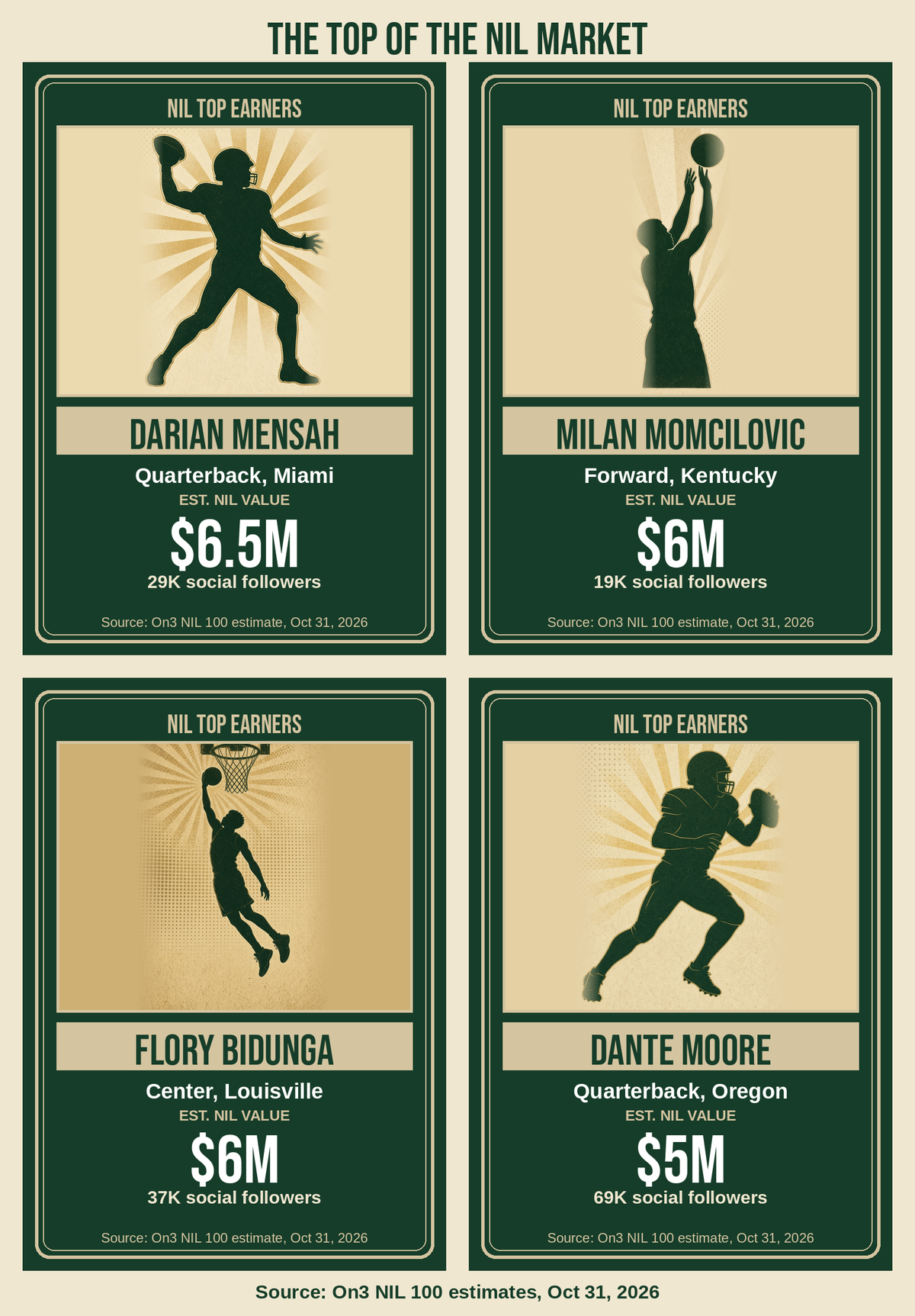
On X: Darian Mensah, Milan Momcilovic, Flory Bidunga, Dante Moore
One player at $6.5 million equals about 30% of a school's cap. Modest follower counts suggest buyers are paying for play, not posts.
Who gets squeezed
Market money goes to football and basketball stars. Inside the cap, every extra dollar for a linebacker is a dollar not spent on a rower or a softball player.
What comes next
The Senate passed the Protect College Sports Act 77 to 22 on Sept 28. It would raise the cap to $48.8 million, with up to $5 million for women's and Olympic sports. The U.S. House takes it up after Nov 3 (USA Today, Sept 29, 2026).
A higher ceiling moves more pay through the front door. Any ceiling set below what top athletes are worth still leaves the side door open. Markets find real value.