
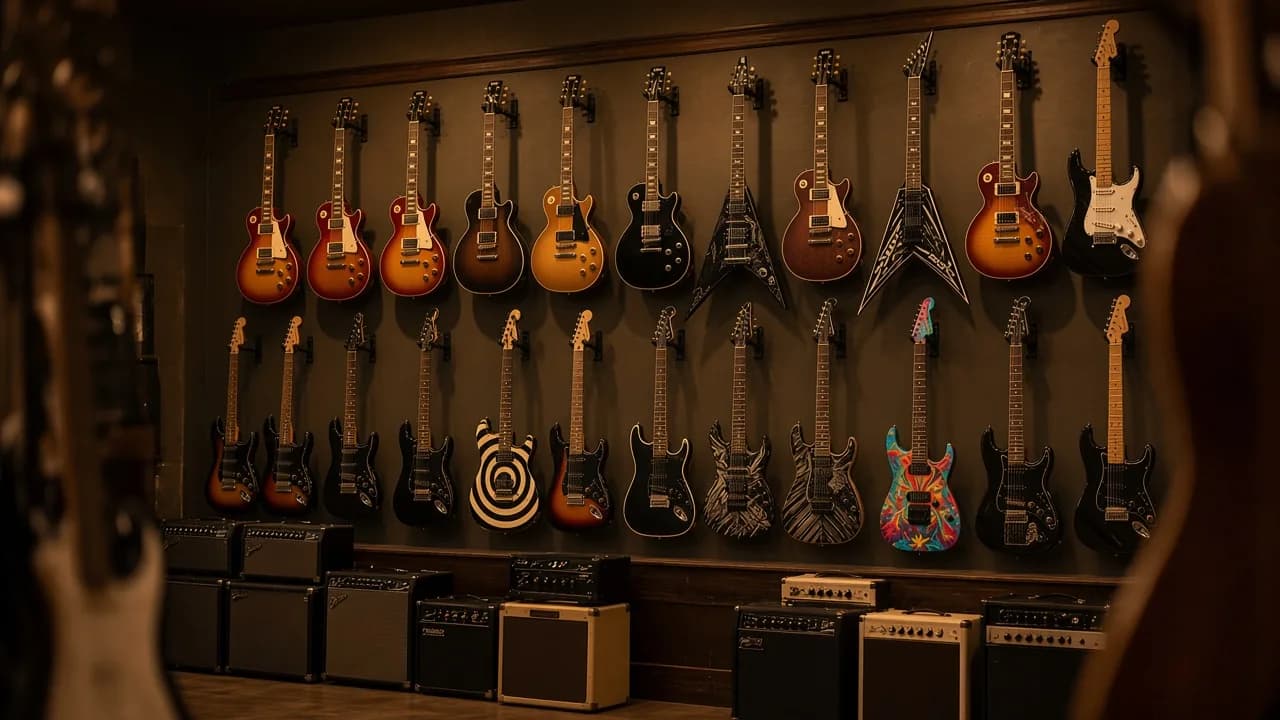
My Guitar Center coworkers wanted to play stages. I was studying for CFA Level I in the break room, in black jeans and high-top Converse Chuck Taylors.
They'd come in for lunch or coffee, see me buried in a finance textbook and look at me like I'd landed from another planet.
They were planning gigs, tours and time off to play with their bands. I was trying to get back into finance. I didn't pass the exam, but that textbook went to work with me and taught me a lot.
Later, while I was working full time at Third Bridge in Times Square, Guitar Center became a refuge.
Manhattan can wear you down, and Times Square turns the volume up on everything. I was finding my footing in a demanding financial services job. At lunch I'd walk over to Guitar Center and play guitars I couldn't afford.
For a little while I could sit with an instrument, hear what it could do and enjoy myself. Those lunch breaks brought me a tremendous amount of joy when I needed it.
Eventually I picked up holiday shifts there. The extra money helped fund ski trips, but working the floor gave me something that stayed with me much longer.
It taught me how to sell.
There's something wonderfully direct about retail. When a salesperson walks up to you in a guitar store, you both understand what's happening. They're there to help you find something, and hopefully to get you to buy it.
You have to approach people. You have to risk rejection.
I learned to read body language and pay attention to my own. I experimented with eye contact, timing and how I opened a conversation. I asked questions that helped me understand what someone wanted, what they could afford and whether they were ready to buy.
Sometimes someone needed guidance. Sometimes they knew far more than I did. Sometimes the conversation was simply a chance to share their excitement about an instrument.
You had to figure out which conversation you were in.
That experience has helped me enormously in expert networking: starting conversations, listening carefully, qualifying thoughtfully and knowing when to give someone room.
So watching Guitar Center struggle around COVID was personal. A place that had helped me through a stressful chapter seemed to be losing its own footing.
This WSJ interview with CEO Gabe Dalporto gave me reasons to root for its comeback. His focus on knowledgeable staff, instruments people can actually play and rebuilding trust brought back what I valued about being there.
Here's the interview that got me thinking about all of this.
The Wall Street Journal
It also connects to something we're working to preserve at The Continental Exchange: experienced people staying close to the customer and the work.
Good judgment takes time to develop. When I started in expert networking in 2018, I needed six or seven months to find my stride. Someone bet on me and gave me that time.
I'm glad they did.
And I'm glad there was a guitar store down the street.