
Departure
AustinTXWhat does this place actually make?
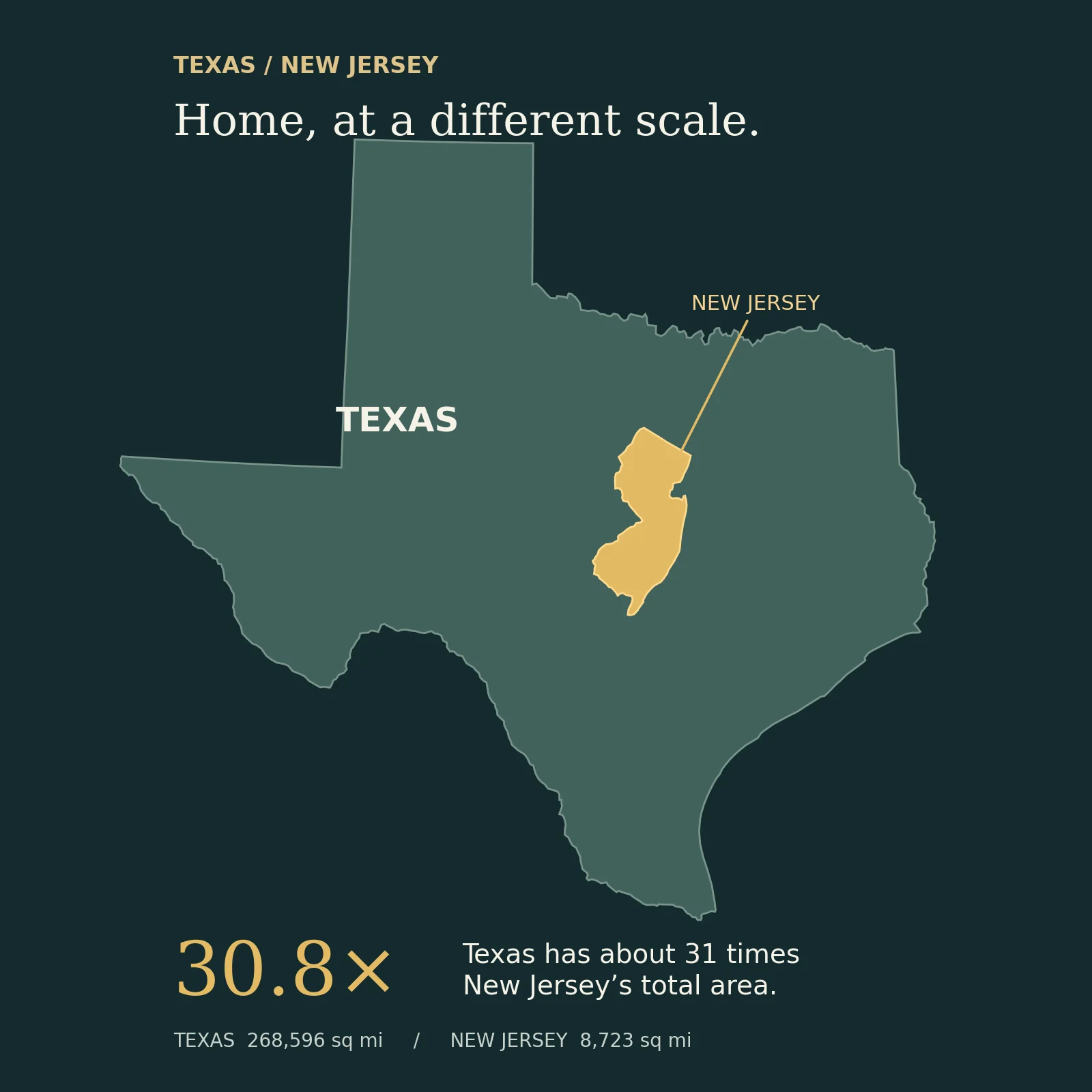
A refinery outside the window. A supplier's name on a yard full of pipe. A sign pointing toward rocket-engine testing. I was driving home to New Jersey, and I kept wanting to know what I was looking at.
I had gone to Texas for work, first Dallas, then Austin. When my lease came up, I realized my business could travel with me. I chose to go home, where my family is and my roots are. That left about 1,800 miles in the Toyota 4Runner, by way of Angleton and the Gulf Coast.
This is the drive as it caught my attention: places I passed through, businesses I noticed, and questions that led somewhere interesting. A name on a sign could send me into the history of a company, its products, or the town around it. I used Claude to help explore the questions, then worked through the research behind this piece.
What does this place make? Why here? Who owns it? Where does the product go? And what kind of life can the work support?
Austin was a useful place to start. Software, state government, a university, and a large economy built around the people working in them. Plenty of ways to earn a living. Plenty of ways to spend it.
Outside the city, the questions became easier to see. A plant. A rail line feeding it. Trucks leaving the gate. I wanted to know what was in them.
Sources & references
- American Community Survey 2020-2024 five-year estimates, Austin TX: population, median household income, median age, median home value, median rent, tenure (tables B01003, B19013, B01002, B25077, B25064, B25003)
- City of Austin
- City of Dallas: former home
Landmark 01
AngletonTXWhat a paycheck buys
Land, housing, and the work within reach.

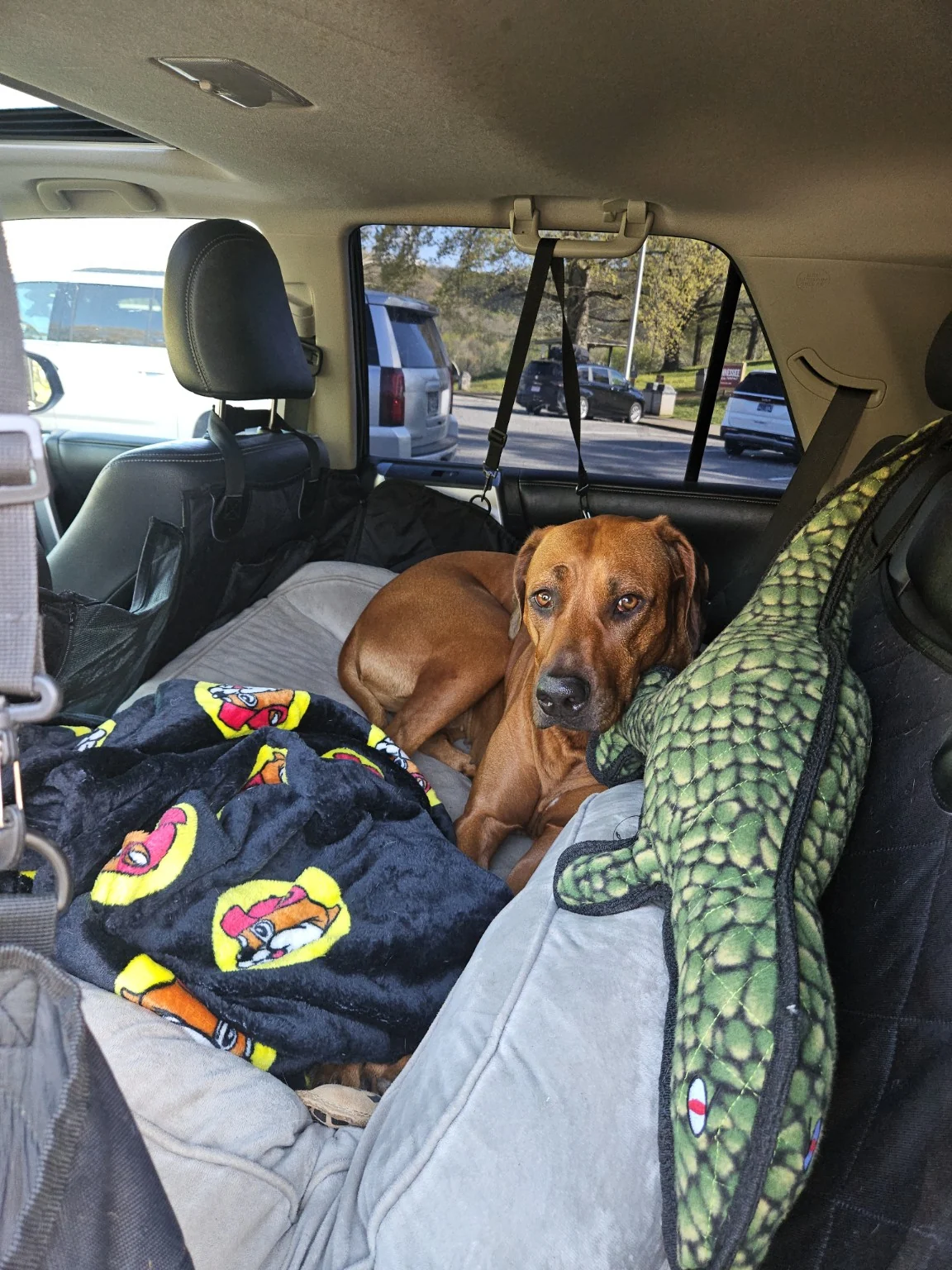
Angleton put the cost of living in a different light. But the reason I drove south from Austin before heading home was personal: I wanted to see Reb and Minnie at Hunterson Farms before I left Texas. This is where Arwen, my Rhodesian Ridgeback, came from.
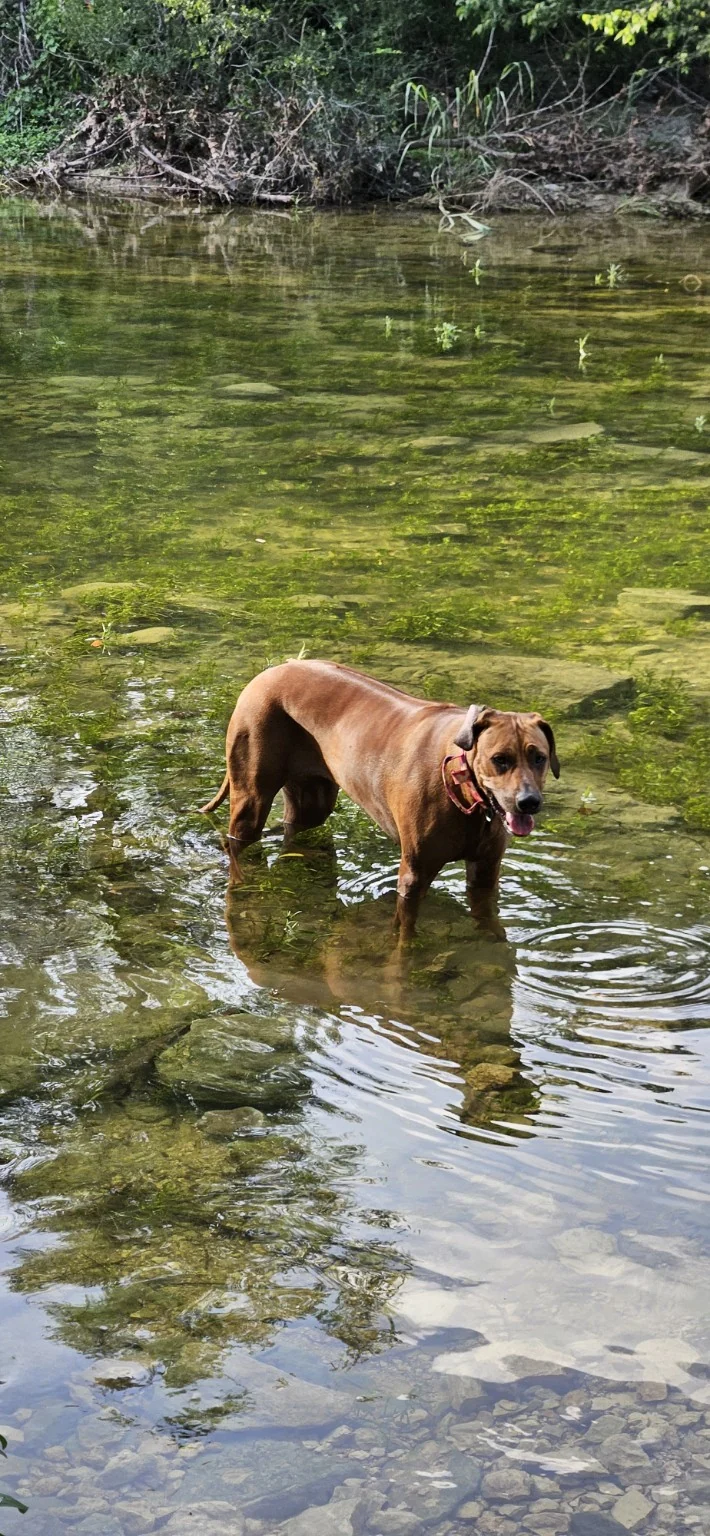
In the nearly three years since I brought her home, her breeders have become like a third set of grandparents to me. My Texas grandparents. We talk every week about our dogs and about life. With nearly twenty Ridgebacks around the property, dogs are at the center of their days. I went to say goodbye to two people who had become family.
The drive through familiar ground also brought me back to a question I had been thinking about in Austin: what does a paycheck buy here?
A boarded-up house with a new Ford Bronco outside. Old equipment on a lot beside a carefully maintained fence. From the road, it is surprisingly hard to tell who has money. A house says very little about the land underneath it, the debt against it, or the paycheck coming in.
Land passed down through a family can change the monthly bills considerably. So can housing that costs a fraction of what it does in Austin. That made me curious about the other side of the equation: where the income comes from.
Two sources of work
Dow's Freeport operation is about fifteen miles south. That puts chemical-plant work and skilled trades within reach. Angleton is also the Brazoria County seat, with the courthouse and government employment that comes with it.
The plant and the courthouse operate on different schedules and budgets. Both help support the businesses around them.
Since graduating college in 2017, I have lived in San Francisco, Manhattan, Austin, Dallas, Boulder, and Montgomery, New Jersey. The cost of staying in those places made this comparison interesting to me. An income you can take anywhere gives you choices. Work tied to a plant gives you a different calculation: what can you earn here, and what does it cost to live here?
I carried that question up the coast.
Sources & references

Landmark 02
BaytownTXThe plant becomes the horizon
The materials are everywhere. So is the influence of the plants that make them.
Around Baytown, the plant becomes the horizon. Tanks, towers, pipe, and water occupy enough of the landscape that I wanted to understand how the pieces fit together.
The Houston Ship Channel brings oceangoing vessels inland to a concentration of refineries and chemical plants. Chevron Phillips Chemical's Cedar Bayou operation makes ethylene and polyethylene. ExxonMobil combines refining and chemical production across a much larger complex nearby.
The names of the products can make this sound remote. The uses are familiar: packaging, pipe, tires, car interiors. You drive past the equipment that makes the materials, then spend the rest of the day using them.
A town on the plant's schedule
Continuous production needs continuous attention. Operators, electricians, pipefitters, and maintenance crews keep the process running. Someone gets the night shift. Someone gets Christmas.
A turnaround changes the rhythm. Units shut down for planned maintenance, and contract crews arrive to inspect, repair, and rebuild them. For the businesses serving those crews, the shutdown creates its own burst of work.
The paycheck keeps moving after it leaves the gate. Restaurants, repair shops, RV lots, and equipment dealers all have a stake in what happens inside the fence. Other employers compete for people who know how to weld, wire, or maintain machinery.
That helps explain why one household income figure can only tell part of Baytown's story. A plant worker and a person serving lunch to the plant workers can live in the same city with very different budgets.
The water concentrates the industry. The wages spread its influence across the region.
Company in focus · Energy & chemicals
The materials leave. Most of us never see them.

ExxonMobil's Baytown refinery began operating in 1920. Chemical, olefins, and plastics operations followed over the decades. The result is a complex that turns raw materials into fuels and ingredients for an enormous range of products.
The olefins plant alone reported about ten billion pounds of petrochemical output a year in its 2024 fact sheet. That includes materials used in packaging, automotive components, and tires. The quantity is hard to picture; the uses are everywhere.
This is why I wanted to look past the refinery towers. Baytown helps make the contents of a shopping cart as well as the fuel for the drive home.
Company sources
Logo: ExxonMobil wordmark source. Used to identify the profiled company.

Sources & references
Landmark 03
BeaumontTXSame town. Different futures.
What a change of owner means on the other side of the gate.

By Beaumont, I was thinking about the owners behind the signs. The equipment might stay in the same place for decades while the decision about its future moved between boardrooms.
Optimus Steel gave me one example. In 2018, Gerdau announced a $92.5 million agreement to sell its Beaumont wire rod mill and two downstream facilities to Optimus. The mill continued making steel under its new owner.
Resin Solutions offered another. After buying product lines from TotalEnergies in 2023, the company announced the closure of its Beaumont hydrocarbon resin line in 2024. Reporting put the impact at about seventy jobs.
Two transactions. Two very different outcomes for the people working at the assets involved.
Who wants to keep investing?
The physical job at a steel mill is easy enough to follow: melt scrap, shape it, sell it. The owner's calculation is harder to see from I-10. Does this mill deserve the next dollar of investment? Is it central to the business or competing with something more attractive elsewhere?
Those questions matter alongside the price of steel or the demand for resin. The sign tells you who owns the gate. It does not tell you where the plant sits in that owner's priorities.
West of Beaumont, the pipe and valve yards around Winnie added another piece. The large plants need distributors who can supply the right part without a long wait. The work includes drivers, crane operators, warehouse crews, and counter staff who know what the customer is asking for.
A refinery makes the obvious landmark. A yard full of pipe can explain just as much about the economy around it.
Company in focus · Chemicals & materials
The chemistry continued. One product line did not.
Resin Solutions was formed to acquire three product lines from TotalEnergies in 2023, backed by Pacific Avenue Capital Partners. The deal put established chemistry inside a new company.
In 2024, the Beaumont C5 hydrocarbon resin line faced closure, with about seventy jobs affected according to local reporting. That line made resins used to give adhesives their tack. The closure announcement concerned that product line, not every operation at the site.
Elsewhere in the business, Resin Solutions markets polymer binders for propulsion under its Stratix brand. Those binders help hold solid-propellant formulations together. The contrast stayed with me: a company can pursue an important new market while people attached to another part of it lose their work.
Company sources
Company in focus · Metals & construction materials
Scrap goes in. Another useful life comes out.
Optimus's Beaumont mill takes recycled steel and turns it into wire rod, reinforcing bar, and billets. Old metal becomes an input for construction and manufacturing again.
In 2018, Gerdau announced a $92.5 million agreement to sell the mill and two downstream facilities to Optimus. The new business, Optimus Steel, kept producing and later invested in upgrades to its rolling operations.
The location helps. Management has pointed to barge, rail, and truck access as an advantage. A mill needs a dependable way to bring in scrap and send a heavy product to customers.
This was the other side of the Beaumont ownership story: a mature industrial asset finding a buyer who wanted to keep working it.
Company sources
Company in focus · Industrial distribution
Hoover Oilfield Supply
The right valve, close enough to matter
The name Hoover Oilfield Supply caught my attention near Winnie. A yard full of pipe raises a different question from a refinery: who gets the equipment to the crew that needs it?
The distinctions are practical. Casing supports the well. Tubing carries fluid through it. Line pipe moves product between locations. Valves control the flow; fittings connect everything together.
Keeping those products available near the work is a business of its own. A customer needs the right size, connection, and specification, with someone who understands the request.
That is what I like about the less prominent names along this drive. A warehouse and a knowledgeable counter staff can be an essential link between a manufacturer and the crew waiting for a part.
Company sources
Sources & references
Landmark 04
Lake CharlesLAA chemical plant with a connection to space
A refinery, a specialized supplier, and the crews working around them.

The industrial landscape continues across the Sabine into Louisiana. Around Lake Charles, Westlake, and Sulphur, I kept finding different businesses sharing the same useful geography.
Sulphur's name points to an earlier resource economy. Sulfur mining helped build the town; petroleum and chemicals became later reasons to work in the area. The original industry could fade while the location remained useful.
CITGO refines crude oil. Calca Solutions makes hydrazine for uses that include aerospace and defense. Diamond D Industries prepares sites and handles heavy civil work and storm restoration.
One makes fuel at enormous scale. One makes specialized chemistry. One gets the ground and access ready for work to happen. Each earns its place in the same industrial corridor.
The small sign was worth following
Calca was the surprise. A chemical operation in Westlake connects to satellite propulsion. Its size on the landscape tells you very little about the importance of its product to a customer.
AE Industrial Partners bought Calca in 2024. NewMarket acquired it in October 2025. The same specialized chemistry had moved from a private equity portfolio into a larger chemical business. Another name on a sign, another ownership story worth following.
I kept coming back to the practical questions. What needs to arrive at the site? What leaves it? Who needs it badly enough to build a business around a reliable supply?
The ship channel is one answer. The contractors and specialized suppliers are others. The biggest plant is only the beginning of the explanation.
Company in focus · Energy & chemicals
CITGO Lake Charles Manufacturing Complex
A Louisiana refinery with an international ownership story
CITGO's Lake Charles complex, at Westlake, has operated since 1944. The company lists crude-processing capacity of roughly 479,000 barrels a day, with products that include gasoline, jet fuel, and diesel.
The ownership history runs much farther than the ship channel. Venezuela's state oil company acquired CITGO in stages during the 1980s and 1990s. Years later, claims against Venezuela drew CITGO's parent company into a court-supervised sale process.
In April 2026, proposed buyer Amber Energy was still publicly seeking U.S. Treasury approval. That dated snapshot illustrates the distance between operating a refinery and deciding who will own the company above it.
The people running the units have a physical process to manage while a separate process unfolds in courts and government offices.
Company sources
Company in focus · Aerospace & defense
A small plant, a very demanding customer
Calca's Westlake operation has a history of hydrazine production reaching back to 1953. Its chemistry serves applications including satellites and defense systems.
In spacecraft propulsion, reliability matters far more than whether the chemical supplier has a familiar name. A specialized material can sit several steps behind the hardware that gets public attention.
AE Industrial Partners acquired Calca in March 2024. In October 2025, NewMarket completed its purchase of Calca's parent company, bringing the operation into its specialty materials business. The ownership changed again; the demanding job of supplying propulsion chemistry continued.
That gives this business a different scale from the refinery nearby. The useful question is what depends on its output. A modest-looking operation can have a place in a much larger aerospace system.
Company sources
Company in focus · Construction & industrial services
Before the plant, somebody has to prepare the ground
Diamond D Industries, based in Sulphur, works on the less visible beginning of an industrial project: clearing land, preparing sites, building access, and handling related civil work.
Its services also include storm response and restoration. In a region exposed to hurricanes, getting a site back into working condition is part of the same practical business as preparing it in the first place.
An expansion announcement usually names the owner and the size of the investment. Behind it are contractors moving dirt, arranging equipment, and making the location usable.
Diamond D caught my attention because that work sits beneath so many of the larger businesses along the channel. Before a new process can run, someone has to make room for it.
Company sources
Sources & references
Landmark 05
Baton RougeLAThe river was worth a second look
The freight route behind the industrial waterfront.
I drove through Baton Rouge on the phone and gave it very little attention. By Hammond, I realized I wanted another look. I turned around.
The Mississippi was worth understanding.
This is the upper end of the river's deepwater shipping corridor. Cargo moving through the interior can connect here with oceangoing vessels. That gives grain elevators, terminals, refineries, and chemical plants a reason to be close together.
Standard Oil began operating here in 1909. More than a century later, the same question still helps explain the location: how do you get a lot of heavy material in and out without spending too much to move it?
Why the young country wanted this river
Driving through Louisiana, I kept thinking about the Louisiana Purchase. I remembered the enormous addition to the map. Here, the practical reason for wanting it was easier to picture.


Farmers upstream could send their crops down the Mississippi, but the route to overseas buyers ran through New Orleans. If another country controlled that outlet, American trade depended on its permission. Jefferson wanted to secure the port. In 1803, his negotiators came back with a much larger deal: France's Louisiana territory for $15 million.
That made the expansion feel less abstract. Land could produce something valuable, but it still needed a way to market. The river joined the interior to the Gulf. Whoever controlled the passage had power far beyond the waterfront.
The borders were messier than the name suggests. Baton Rouge remained under Spanish control until 1810, when a local revolt helped bring the area into the United States. And the territory France sold was already home to Native nations; the agreement between governments did not erase their lives or claims to the land.
The cargo and equipment changed. The route remained valuable. Barges, pipelines, elevators, and terminals now connect producers across a much larger territory than the city visible from the interstate.
Baton Rouge also has the state government and university. Industrial shifts, a legislative calendar, and a school year all generate work here. The city has several reasons to be busy.
That was the lesson I nearly drove past. A place can look like a collection of exits until you understand what runs through it.
Company in focus · Energy & chemicals
A century-old industrial site reaches into chipmaking
A refinery is a good place to start asking what else comes out of the process. ExxonMobil's Baton Rouge operations include chemicals, lubricants, and plastics alongside fuel.
One connection runs to semiconductors. In 2025, ExxonMobil announced plans to produce 99.999% pure isopropyl alcohol in Baton Rouge beginning in 2027. Chipmakers use the solvent in wafer processing, where tiny amounts of contamination matter.
The household version is familiar from cleaning and first-aid supplies. Making a grade suitable for advanced electronics is a different job. An industrial location dating to 1909 has found another reason to keep developing its chemistry.
Company sources
Logo: ExxonMobil wordmark source. Used to identify the profiled company.
Company in focus · Transportation & logistics
Where a river shipment meets the rest of the world
A port earns its place by connecting forms of transport. At Greater Baton Rouge, that means oceangoing ships, inland barges, rail, and trucks.
Grain, petroleum, chemicals, forest products, and other cargo move through a region built around that access. The terminals and storage facilities let goods change vehicles, wait for a buyer, or continue toward another part of the country.
This is the business behind the map. A river has economic value when someone builds the equipment and services that let a producer use it. The grain elevator and the dock are as much a part of the value chain as the farm or the factory.
Browse all company profiles ↑Sources & references
- Office of the Historian, Louisiana Purchase
- National Archives, Louisiana Purchase Treaty
- Port of Greater Baton Rouge
- ExxonMobil Baton Rouge
- National Archives, Louisiana Purchase Treaty (1803)
- National Archives, why Jefferson sought New Orleans
- City of Baton Rouge, Spanish rule and the 1810 revolt
- City of Baton Rouge
- City of Hammond
- City of New Orleans
Landmark 06
Stennis Space CenterMSWhy put rocket engines in a pine forest?
The sign beside the highway had a very loud explanation.
.jpg)
Then there was a sign for an acoustic buffer zone.
I wanted to know what needed that much room to be loud. The answer was Stennis Space Center.
NASA selected the Mississippi site in 1961 for rocket testing. It offered space, a large surrounding buffer, and access by water. Saturn V stages could travel from the Michoud assembly facility in New Orleans by barge, then be mounted on a test stand and fired.
The waterways were part of the engineering. So was the distance between the test stands and their neighbors.
More than a NASA sign
Looking into Stennis revealed a larger federal campus: rocket testing, Navy oceanography, other agencies, and contractors. Several kinds of work share the infrastructure.
After the Gulf's chemical plants, the aerospace connection was easier to recognize. Propulsion needs materials, manufacturing, transport, and testing. No single sign beside the highway explains the whole system.
There is a human history here, too. Communities including Logtown and Gainesville were displaced to make room for the facility and its buffer. The apparently empty land had been home to people.
Both stories belong here: the engineering that needed the space, and the communities that gave way to it.
Company in focus · Aerospace & defense
Stennis Space Center: the federal campus
Rockets are only part of the campus
Stennis is known for NASA's rocket tests, but its work extends beyond propulsion. Navy organizations study the ocean and atmosphere there, alongside other federal agencies and contractors.
The shared location puts laboratories, technical staff, and infrastructure within the same campus. Its employment therefore reaches across several missions and programs.
The barge connection is an especially good detail. Very large rocket stages could move from their assembly site to the test stands by water. Geography solved a problem that would have been difficult to handle by road.
From the interstate, Stennis was a sign that prompted a question. Behind it was a collection of capabilities that took much longer to understand.
Browse all company profiles ↑Sources & references
- NASA Stennis Space Center history and facilities pages
- Naval Oceanographic Office / Naval Meteorology and Oceanography Command
- INFINITY Science Center (visitor center, Saturn V first stage provenance)
- Hancock County lost-towns histories (Logtown, Gainesville, Napoleon, Santa Rosa, Westonia)
- NASA, selection of Stennis and displaced communities
- NASA Stennis Space Center
- NASA Michoud Assembly Facility
- Logtown: Hancock County Historical Society
- Gainesville: Hancock County Historical Society
- Hancock County Historical Society, Logtown archive
- Hancock County Historical Society, Gainesville
Landmark 07
KilnMSWhere you live and where you work
A small community can belong to a much larger labor market.

Kiln, pronounced "kill," has timber in its history and kilns in its name. The large sawmill economy faded. Nearby employment gave the area another way to make a living.
Stennis lies within reach. So do jobs along the coast and toward New Orleans. A person can live in a small place while earning a paycheck from a much larger operation outside it.
That is an easy connection to miss from the road. A quiet main street does not tell you where its residents spend the working day.
The geography is easier to understand. A town's prospects depend partly on the work people can reach from home. Its own boundary does not contain its entire economy.
Farther north, Lumberton raised the harder version of that question.
Sources & references
- Wikipedia, "Kiln, Mississippi" (name origin, sawmill and kiln history, Favre)
- American Community Survey 2020-2024 five-year estimates, Kiln MS: population, median household income, median age (tables B01003, B19013, B01002)
- Huntington Ingalls Industries, Ingalls Shipbuilding (Pascagoula workforce)
- Hancock County Historical Society: Kiln
Landmark 08
LumbertonMSWhen the original industry fades
The town remains. The work that built it changes.

Lumberton's name tells you what it was built around. Pine, sawmills, and a railroad gave the town a reason to grow.
Driving through timber country, I kept wondering what happens after that original business contracts. The trees can still be there. The jobs can be somewhere else.
Kiln has the coastal employers nearby. Lumberton looks toward Hattiesburg as well as its own schools, public services, and small businesses. Those are different sets of options for people deciding whether they can stay.
The question I came away with was straightforward: when the work that built a place gets smaller, what can its people do next without having to leave?
Sources & references
- Wikipedia, "Lumberton, Mississippi" (name origin, 2020 population, county split, metro area)
- American Community Survey 2020-2024 five-year estimates, Lumberton MS: population, median household income, poverty, median age (tables B01003, B19013, B17001, B01002)
- zip-codes.com, Business Census 2024 (establishments, employment, payroll)
- Mississippi Encyclopedia, "Lamar County"; msgw.org, "Sawmills and the Men Who Owned Them"
- City of Lumberton: Mississippi Municipal League
- City of Hattiesburg
Landmark 09
MeridianMSWhat a town keeps, and what it adds
Railroads, pilot training, and guitar amplifiers with Mississippi roots.
Meridian grew around a railroad junction. Looking into the place took me from rail to military aviation, hospitals, education, and audio equipment.
That range matters. Different employers give a town different ways to earn a living, even when the original reason for its growth has changed.
Naval Air Station Meridian trains Navy and Marine jet pilots. After the Gulf's aerospace chemistry and Stennis's engine testing, another part of the defense economy had appeared along the route.
Guitar amplifiers from Mississippi
Peavey Electronics took me from jet pilots to guitar players. Hartley Peavey started building guitar amplifiers in Meridian in 1965 and grew an internationally known music-equipment business from there. These are the amps behind electric guitars, the kind you see in rehearsal rooms and on concert stages.
The later manufacturing story is complicated. Peavey announced the closure of two Mississippi plants in 2015 while retaining its Meridian headquarters. That is a meaningful distinction. A company can remain associated with a town while the mix of work it does there changes.
It also makes "the company is still here" an incomplete answer. Which functions remain? Production, engineering, administration, distribution? What skills do those jobs require?
Meridian gave me several versions of the same question. What does a place retain from its past, and what does it learn to do next?
Company in focus · Aerospace & defense
The supply chain needs a trained pilot, too
Naval Air Station Meridian's role is training, including the Navy and Marine Corps pilots who will fly jets. The aircraft requires factories and suppliers; making it useful also requires instruction, maintenance, and repeated practice.
That brings military and civilian employment to the Meridian area. Housing, services, and local businesses are connected to the base even when they have no direct role in aviation.
It widened my definition of what a place produces. Meridian helps produce a capability: people qualified to do a difficult job. The Gulf's materials and Stennis's testing facilities belong to the same broad defense economy, even though each location does something different.
Browse all company profiles ↑Company in focus · Consumer products
A guitar amplifier becomes a recognizable name

Hartley Peavey founded his guitar-amplifier company in Meridian in 1965. Company histories describe a start with small amounts of capital and guitar amps built one at a time. The business grew into electric guitars, bass and guitar amplification, and professional audio equipment sold far beyond Mississippi.
That is an interesting manufacturing story on its own: technical knowledge and a product finding a market from a relatively small city.
The later history adds a question about which work stays local. Peavey announced two Mississippi plant closures in 2015 while retaining its Meridian headquarters. Some U.S. production continued; the closures should not be read as the end of every American-made Peavey product.
A brand's hometown, its headquarters, and its factories can tell different stories. Here, I wanted to understand all three.
Company sources
Sources & references
- Wikipedia, "Naval Air Station Meridian"; mybaseguide; East Mississippi Business Development Corporation (embdc.org)
- Livability / Scout Cities, Meridian top employers and economic base
- FundingUniverse, ReferenceForBusiness, Encyclopedia.com, Peavey Electronics company histories
- City of Meridian
Landmark 10
Bessemer & HooverALTwo economies around the same city
A short drive raises a much bigger question about work and household income.
I-459 took me around the south side of Birmingham, through an area where the economic contrast changes quickly.
Bessemer grew around iron and steel. Hoover grew later, with office employment, healthcare, retail, and interstate access. They belong to the same metropolitan area, but their household budgets look very different.
The Census estimates put median household income at about $39,600 in Bessemer and $109,300 in Hoover. That is a large gap over a short drive.
Look behind the household number
Industry and distribution remain part of Bessemer's employment base. Hoover has a larger concentration of professional and service work. Those differences shape the hours people work, what they can spend, and the businesses that open around them.
It would take much more than a drive to explain the gap. The history of housing, schools, access to work, and investment belongs in that explanation too. But the contrast made me pay attention to the kind of employment each place had gained or lost.
Bent Brook Golf Course caught my eye from I-459. I wondered who owned it and found a business with a much more local story than I expected. Even here, the interesting answer was not always the largest company.
More than a race weekend
Talladega was another name I remembered from the drive. My first association was Ricky Bobby and Talladega Nights. Shake and bake. Then came the question: what happens around here when there is no race?

The speedway is near Lincoln, in Talladega County, east of Birmingham. So is Honda's Alabama auto plant. The region has a vehicle-manufacturing story alongside the racing one. Another familiar name had led me to work I knew much less about.
Company in focus · Leisure & recreation
The golf course that made me ask about ownership
Bent Brook caught my eye from I-459. I wondered whether it belonged to a larger golf business.
The course's own history centers on founder Jimmy Lee and a public course opened in 1988. Its 27 holes are arranged as three nine-hole courses: Brook, Windmill, and Graveyard.
The stated idea was to make a high-quality course available to people paying a daily fee. That was enough to make it interesting in this stretch between Bessemer and Hoover: a local business selling access to a carefully maintained piece of ground.
Every ownership question on the drive did not need to end in an acquisition. Sometimes the useful answer was the person who decided to build the thing.
Company sources
Sources & references
- Encyclopedia of Alabama, Hoover
- City of Hoover, Alabama
- American Community Survey 2020-2024 five-year estimates, Hoover and Bessemer AL: population, median household income, poverty (tables B01003, B19013, B17001)
- City of Bessemer
- City of Hoover
- City of Birmingham
- City of Talladega
- City of Lincoln, Alabama
- Talladega Superspeedway, Lincoln address
- Honda, Alabama Auto Plant
Landmark 11
CommerceGAA new industry, a new set of risks
Building the factory is one decision. Keeping it busy is another.

Past Atlanta, a battery plant brought the industrial map into a different era.
SK Battery America's Commerce operation brought two battery-cell plants to the area through a reported $2.6 billion investment. A new industry had arrived beside I-85, bringing specialized battery-manufacturing work to the area.
The inputs reach far beyond Georgia. Metals, graphite, foil, and other materials become cells, which become part of a vehicle. Production scrap can feed a recycling business. Following the factory backward and forward takes you across the country and overseas.
The plant still needs a customer
Investment builds the facility. Orders keep the lines busy.
In March 2026, SK Battery America cut 958 jobs at Commerce, leaving about 1,600 employees, according to its WARN filing as reported by the Associated Press. The scale of that reduction made the demand question tangible.
The challenge for workers is specific. Someone trained for battery production has invested time in a process and a set of skills. A vacancy at a warehouse nearby may offer a different wage, schedule, and future.
This was an important counterpoint to the old mill towns. A place can attract a new industry and still face a difficult adjustment when the market changes.
Farther up I-85, South Carolina offered a manufacturing story with several more decades behind it.
Company in focus · Automotive & batteries
Precision work inside a very large demand bet
SK Battery America put two battery-cell plants in Commerce, backed by a reported $2.6 billion investment. Production came online in stages across the two factories.
Cell manufacturing involves coating and drying materials, assembling electrode layers with separators, making electrical connections, adding electrolyte, and sealing the cell. Quality at each stage matters to the finished battery.
The scale of the investment makes the change in employment striking. The March 2026 reduction affected 958 workers, roughly 37% of the plant's workforce, according to reporting on the company's WARN notice.
The process still requires specialized skills. The number of people needed to run it depends on the orders. Commerce shows how a long-term industrial investment can meet a fast-changing market.
Company sources
Sources & references
Landmark 12
Greer & SpartanburgSCThe factory brings other businesses with it
Cars, components, rail, and a route to overseas buyers.
The drive from Commerce toward Greer felt like a succession of industrial exits. Plants, warehouses, trucks, then more of each.
BMW announced its Spartanburg County factory in 1992 and built its first car there in 1994. Over time, the operation helped draw suppliers, logistics businesses, and skilled workers into a larger regional network.
The region already had an industrial workforce. Textile production had left experience with machinery, maintenance, quality, and shift work. A new product could draw on some of that accumulated knowledge, while requiring new skills of its own.
South Carolina to the world
BMW's factory makes vehicles for buyers well beyond the United States. Rail connections and the Port of Charleston help turn an inland assembly plant into an export business. Inland Port Greer handles container traffic between the coast and the Upstate.
That brought me back to Baton Rouge. A different product, but the same practical issue: moving inputs to a plant and getting the finished goods to a customer.
The effect reaches beyond the name on the factory. Suppliers need quality engineers, maintenance staff, managers, drivers, and warehouse workers. Their employees need somewhere to live and places to spend their wages.
By this point, I was seeing the exits differently. Assembly, components, tires, rail, and shipping were parts of one regional story.
Company in focus · Automotive & batteries
BMW Manufacturing, Plant Spartanburg
An American factory serving overseas buyers

BMW's South Carolina factory began producing cars in 1994. What grew around it includes component suppliers, transport businesses, and a workforce serving an international vehicle business.
BMW reported 412,799 vehicles produced in 2025 and nearly 200,000 exported, with exports valued at about $9 billion. Those figures make the outward connection concrete: many of the vehicles built here are headed for buyers in other countries.
The port and rail network are part of the production story. So are the businesses supplying and maintaining the factory.
A large assembly plant gives a region a recognizable name. The deeper economic story is how many other businesses find a reason to operate around it.
Browse all company profiles ↑Sources & references
Landmark 13
MooresvilleNCWhat racing knows how to do
A cluster of skills finds more than one customer.
.jpg)
North of Charlotte, the road reaches Race City. Mooresville's racing businesses depend on people who can build an engine, machine a precise part, shape a body, and solve a problem before the next race.
That concentration of skill was what interested me. Competition gives people a reason to become very good at something difficult. Sometimes another industry needs a version of the same thing.
Another customer for the physics
Corvid Technologies works in computational physics, engineering, and manufacturing, with applications in motorsports and defense. Airflow, impact, and the behavior of materials matter in both.
The products differ, but some of the questions rhyme. What happens at speed? Where does the load go? How will the structure behave when conditions change?
The Gulf plants had me thinking about water, raw materials, and freight. Mooresville added another reason businesses cluster: people who already know how to solve the next customer's problem.
Lowe's brings a different kind of work to the same town. A retail headquarters has its own network of suppliers, distribution centers, technology, and people. Race schedules and retail calendars shape different working lives within the same local economy.
The question follows both: how far can a place carry the skills it already has?
Company in focus · Aerospace & defense
A race car and a defense problem can share some physics
Corvid is an employee-owned engineering and defense company based in Mooresville. Its work combines computer simulation, testing, prototyping, and manufacturing.
The overlap with motorsports is what caught my interest. Airflow, impact, structural loads, and materials behavior matter in both racing and defense. The finished products differ, but some of the technical skills travel between them.
Simulation is only part of that work. A design eventually has to meet a physical test, which gives engineers, machinists, and test facilities a reason to work close together.
This was another kind of industrial geography: a cluster built around what people know how to do, with more than one industry willing to pay for it.
Company sources
Company in focus · Retail & distribution
Every aisle has a supply chain behind it
Lowe's headquarters puts a national retail business in Mooresville alongside the racing and engineering companies.
Think about what one store has to bring together: lumber, appliances, plumbing, tools, paint, flooring, and garden supplies. Those products come from different manufacturers, arrive through different distribution systems, and follow different patterns of demand.
Keeping them available requires buying, forecasting, transport, technology, and inventory decisions. The familiar storefront sits at the end of that coordination.
It gives Mooresville another kind of employment base. A corporate office and a race shop may work to different deadlines, but both depend on people who can get the right thing to the right place when it is needed.
Company sources
Sources & references
Landmark 14
Shenandoah ValleyVAThe landscape is doing a job
A beautiful valley carrying a great deal of freight.

North out of Mooresville, I-77 meets I-81 at Fort Chiswell. The drive opens into a valley corridor, with ridgelines on either side and farmland below.
It was the prettiest stretch of the trip. The trucks were a reminder that it was also doing a job.
A valley gives people and freight a way through the mountains. Roads and railways have used that advantage for generations. I was following a route that made economic sense long before the Toyota 4Runner.
Roanoke added another example of a place adapting. Railroad work helped build the city; healthcare and medical education now provide other important sources of employment.
The scenery did not need much explanation to be worth looking at. Understanding the freight made it more interesting. The landscape I was enjoying was helping everything around me get somewhere.
Sources & references
Landmark 15
BaltimoreMDWhat remains after the steelworks
Old industrial land, working terminals, and the question of what comes next.

Baltimore brought the drive back to deep water, rail, and the industrial history built around both.
Sparrows Point was the enormous steel story nearby. The mill’s history stretched from 1887 to its closure in 2012, and employment reached tens of thousands at its peak. The closure left industrial land, infrastructure, and generations of people whose working lives had been tied to the plant.
Tradepoint Atlantic's redevelopment gives the site another chapter. Whether that chapter offers comparable opportunities to the people affected by the old one's end is a harder question.
The work changes
By now I had several steel stories in mind. Beaumont's mill continued under new ownership. Bessemer lived with a smaller steel economy. Sparrows Point closed and moved toward other uses.
The common question was what replaces the work, and who can get the new jobs.
My GPS routed me onto streets I had not intended to take, and I ended up lost in a part of Baltimore where I felt unsafe. People appeared to be heavily impaired, some nodded off on sidewalks in broad daylight. It was the only stretch of the entire drive where I felt genuinely uncomfortable. I wanted to find my way out.
I could not know anyone's circumstances from behind the wheel. But I do not think that kind of decline should become something we simply accept. People living there deserve safe streets and help that reaches those in crisis. Both belong in our expectations of a functioning city.
The working port was another part of what I noticed. Ships still need unloading. Cargo needs storage and a route inland. Healthcare and education provide substantial employment elsewhere in the city.
A harbor worth defending
The port's importance reached back well before the steelworks. During the War of 1812, Baltimore outfitted privateers that attacked British shipping. In September 1814, Fort McHenry helped defend the harbor against the British attack that inspired the words of the national anthem.
That history gave the waterfront another dimension. A harbor could support trade, shipbuilding, and a young country's ability to defend itself. In Louisiana, I had been thinking about acquiring access to the sea. Here was a place that had fought to keep its own.
The useful waterfront remained. The businesses and jobs around it had changed. That distinction made me want to keep looking past the simple story that industry had left.
Company in focus · Transportation & logistics
LOGISTEC / BalTerm, Port of Baltimore
The business between the ship and the shore
LOGISTEC's Baltimore operations, long known as BalTerm, handle cargo such as paper, pulp, and other forest products. The work includes unloading vessels, storing goods, and transferring them toward their next destination.
That is stevedoring: the physical business of loading and unloading ships. Warehouses, lifting equipment, transport links, and crews turn access to deep water into a service a customer can buy.
The parent company was taken private by Blue Wolf Capital Partners and Stonepeak in 2024. Baltimore's BalTerm operations adopted the LOGISTEC name in 2025.
The name changed. The waterfront still had cargo to move. It was a useful reminder, after the steel history, to ask which industrial functions had continued.
Company sources
Sources & references
- Baltimore Museum of Industry, Sparrows Point
- Alliance for American Manufacturing
- Census QuickFacts, Baltimore City MD
- Maryland Port Administration
- National Park Service, Fort McHenry and the 1814 defense of Baltimore
- City of Baltimore
- Sparrows Point redevelopment: Tradepoint Atlantic
- Baltimore Museum of Industry, Sparrows Point history
- National Park Service, Baltimore privateers
Landmark 16
PennsvilleNJHome starts with another chemical plant
The materials behind familiar products, and what production leaves behind.

Across the Delaware Memorial Bridge, I was back in New Jersey. Chemistry was waiting on the other side.
Chambers Works, in Deepwater, became a major DuPont manufacturing site. Its history runs through dyes, rubber and textile chemicals, refrigerants, and fluorochemicals. Familiar products depended on operations most customers would never see.
The distinction between inventing and making matters here. DuPont's Wilmington research facilities and its manufacturing sites had different jobs. A material could begin in a laboratory and then need an entirely different operation to produce it at scale.
The part that stays behind
Chemours became the operator through DuPont's 2015 performance-chemicals spin-off. The site's environmental legacy also remains part of the story: contamination, investigation, and cleanup outlast individual products and corporate names.
The broader materials history brought earlier parts of the drive back to mind. Protective fibers connect chemistry to safety equipment and racing. Specialized propellants connect it to aerospace. The product we recognize often sits at the end of a long chain of less familiar businesses.
I had driven from Texas to New Jersey thinking about that chain. Even the bridge home led past another part of it.
Company in focus · Chemicals & materials
A useful product can leave a long legacy
Chambers Works became a major manufacturing site in DuPont's chemical business. Its history includes dyes, textile and rubber chemicals, refrigerants, and fluorochemicals.
Chemours took over through the 2015 separation of DuPont's performance-chemicals operations. The corporate name changed, but the location carried the accumulated history of production with it.
That includes the environmental work. Groundwater investigation and remediation belong in the account alongside the products and jobs. They are part of what remains after decades of making chemicals at scale.
I found the site interesting for both reasons. It helped manufacture materials used far beyond South Jersey, and it shows how long a place can live with the consequences of what it makes.
Company sources
Sources & references
Landmark 17
Belle Mead (Montgomery)NJThe last connection was under the tires
Coming home with a different way of looking at familiar roads.
Off the Turnpike, onto Route 1, then onto roads I learned to drive on. Belle Mead was home, and the industrial questions had followed me all the way there.
The Sourland ridge contains diabase, a hard rock formed when magma cooled underground. Nearby quarrying turns that geology into useful material. At Kingston, Trap Rock Industries supplies crushed stone and asphalt for construction.
After all the chemical plants, mills, and factories, I was thinking about pavement. The material that makes the drive possible has its own source, equipment, workers, and customers.
Washington was here, too
Coming through Rocky Hill, I saw Rockingham, George Washington's final wartime headquarters. Near the quarry, on roads familiar to me, was a place tied to the country's beginnings.

Washington stayed there from August to November 1783 while the Continental Congress met in Princeton. He received news that the Treaty of Paris had been signed and wrote his Farewell Orders to the army there. The fighting had largely stopped; now the army was preparing to disband. The work of making an independent country hold together was still ahead.
That history is part of our name, too. I started the firm as Minuteman Xchange. As our team grew, we began using The Continental Exchange. The name draws on the Continental Army and the country's beginnings, a connection that felt especially close to home here.
Then I found a connection I had not expected: the house itself had been moved three times as quarrying expanded, most recently in 2001. The Revolutionary landmark and the industrial landscape had been sharing ground for generations.
In Louisiana, the question was how a young country secured a route for its trade. Back home, I was passing a place where its commanding general prepared to leave military service. The beginnings of the country and the businesses supplying it were turning up along the same drive.
Infrastructure gets another life
The Delaware and Raritan Canal offers another local connection. Built for freight, including Pennsylvania coal, it later became a source of drinking water for Central New Jersey.
The original business can end while the infrastructure keeps working. I had followed versions of that story along the Gulf, through the mountains, and past old industrial waterfronts.
At home, the connections were easier to overlook because I knew the roads so well. The drive had given me a reason to ask about them again.
Company in focus · Metals & construction materials
Trap Rock Industries, Kingston Quarry
A quarry makes the road tangible
Trap Rock Industries supplies crushed stone and asphalt from its New Jersey operations, including Kingston. Its company history dates the Stavola family's purchase of the Kingston quarry to 1966.
The rock is diabase, valued for its durability. Breaking and sizing it turns a geological feature into construction material. The same business supplies hot-mix asphalt and recycled aggregate.
This was a satisfying place for the industrial questions to end. A road looks finished when you drive on it. Looking backward reveals a quarry, processing equipment, transport, and a crew that laid the material down.
Close to home, I had found another business making something the entire journey depended on.
Company sources
Sources & references
- NJ Geological Survey, Newark Basin geologic maps
- NJ.gov, Delaware & Raritan Canal State Park history
- Sourland Conservancy
- Montgomery Township, NJ
- Trap Rock Industries, Kingston quarry history
- Trap Rock Industries, aggregate and asphalt
- Rockingham State Historic Site, Washington’s final wartime headquarters
- Rockingham, Washington’s residence and the quarry relocations
- Montgomery Township, including Belle Mead
- Borough of Rocky Hill
- Municipality of Princeton
- Kingston Historical Society
- Sourland Conservancy
- D&R Canal State Park
- New Jersey Water Supply Authority, Raritan Basin
What I brought back
These landmarks caught my attention for different reasons. What connected them was the habit of asking another question.
Why is the factory here? What has to reach it? Where does its output go? What do the people around it know how to do? What happens when the owner changes?
That is the curiosity I bring to The Continental Exchange. A company name gives me somewhere to start. I want to understand the work behind it and talk to people who know that work firsthand.
My own work could travel. I chose to come home, where my family is and my roots run deepest.
I spent the drive following the things that make other things possible. By the time I got home, even the road was part of the story.
Austin to Belle Mead.The end of the drive. More questions to follow.
Explore the companies →